

Last Updated: November 14, 2025
The Sadanandam Vrindavan Mantra is a sacred Sanskrit verse that invokes Lord Krishna’s eternal joy in the mystical gardens of Vrindavan, promising to cool the burning flames of worldly suffering with the sweet nectar of divine love.
Disclaimer: This article is intended for informational and devotional purposes only. The spiritual practices described are based on traditional Hindu devotional literature and personal experiences shared by practitioners. While we’ve made every effort to ensure accuracy in translations and meanings, Sanskrit is a complex language with layered interpretations. For serious spiritual guidance, please consult qualified teachers in the Vaishnava tradition. The benefits mentioned are based on traditional beliefs and anecdotal evidence; individual experiences may vary. This content should not replace professional advice for mental, physical, or emotional health concerns.
Quick Facts About Sadanandam Vrindavan Mantra
| Aspect | Details |
|---|---|
| Origin | Ancient Sanskrit devotional literature |
| Deity | Lord Krishna and Radha (Divine Couple) |
| Location Referenced | Vrindavan, Uttar Pradesh, India |
| Type | Devotional mantra/shloka |
| Primary Purpose | Spiritual liberation and inner peace |
| Language | Sanskrit |
| Recitation Time | Anytime, especially during morning prayers |
| Recommended Count | 108 times or multiples thereof |
What Is the Sadanandam Vrindavan Mantra?
Imagine standing in a garden where every leaf whispers love stories, where the air itself smells of divine romance, and where time stands still in eternal bliss. That’s Vrindavan for you—and the Sadanandam Vrindavan Mantra is your golden ticket to that sacred realm.
This beautiful Sanskrit chant isn’t just a collection of pretty words strung together. It’s a spiritual powerhouse that transports devotees straight to the heart of Lord Krishna’s playground. When you recite this mantra, you’re essentially knocking on heaven’s door and asking the divine couple—Radha and Krishna—to shower you with their cooling grace.
The word “Sadanandam” itself breaks down into “Sada” (always) and “Anandam” (bliss). So right from the first word, this mantra promises something we all desperately need: eternal happiness. And honestly, who wouldn’t want that?
The Complete Sadanandam Vrindavan Mantra in Sanskrit
Here’s the Sadanandam Vrindavan Mantra Lyrics in Sanskrit:
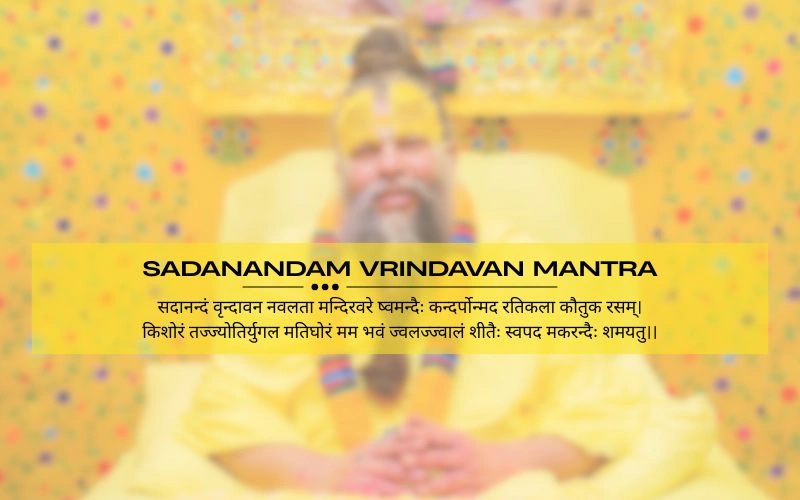
सदानन्दं वृन्दावन नवलता मन्दिरवरे ष्वमन्दैः कन्दर्पोन्मद रतिकला कौतुक रसम्।
किशोरं तज्ज्योतिर्युगल मतिघोरं मम भवं ज्वलज्ज्वालं शीतैः स्वपद मकरन्दैः शमयतु।।
The beauty of Sanskrit lies in its phonetic perfection. Every syllable carries vibration, every word holds energy. When you pronounce this correctly, it’s like tuning your soul to the frequency of divine love.
Sadanandam Vrindavan Mantra in English
For those who find Sanskrit script challenging, here’s the Sadanandam Vrindavan Mantra in English transliteration:
Sadanandam Vrindavan Navalata Mandiraware
Svamandaih Kandarponmada Ratikala Kautuka Rasam
Kishoram Tajjyotiryugala Matighora Mama Bhavam
Jvalaijvalam Shitaih Svapada Makarandaih Shamayatu
Pro tip: Don’t rush through it. Let each word roll off your tongue like honey. This isn’t a race—it’s a conversation with the divine.
Sadanandam Vrindavan Mantra Meaning: Unlocking the Treasure
Now, let’s crack open this spiritual treasure chest and see what gems lie inside. The Sadanandam Vrindavan Mantra Meaning is absolutely breathtaking:
“In the beautiful Navalata temple of ever-blissful Vrindavan, where the divine youthful couple radiates like blazing light, filled with the playful essence of divine love that surpasses even Kamadeva’s intoxication, may they extinguish the fierce burning flames of my worldly existence with the cool nectar of their lotus feet.”
Let’s break this down further:
Line-by-Line Breakdown
“Sadanandam Vrindavan Navalata Mandiraware”
- This refers to the sacred Navalata temple in Vrindavan, where Lord Krishna eternally resides in blissful play. Navalata means “new creeper” or “fresh vine”—symbolizing the ever-renewing nature of divine love.
“Svamandaih Kandarponmada Ratikala Kautuka Rasam”
- Here’s where it gets juicy! Kamadeva (Kandarpa) is the god of love in Hindu mythology. This line says that Krishna’s beauty and charm surpass even Kamadeva’s intoxicating power. The “Ratikala” refers to the art of divine love—not worldly romance, but that pure, transcendent connection.
“Kishoram Tajjyotiryugala”
- “Kishora” means the eternal youthful divine couple—Radha and Krishna. They’re described as “Jyoti” (luminous), radiating spiritual light that illuminates the darkness of ignorance.
“Mama Bhavam Jvalaijvalam Shitaih Svapada Makarandaih Shamayatu”
- This is the prayer part. “My worldly existence (Bhavam) burns with fierce flames (Jvalaijvalam), please cool it down (Shamayatu) with the sweet nectar (Makarandaih) from your lotus feet (Svapada).”
Sadanandam Vrindavan Mantra Meaning in Hindi
For our Hindi-speaking devotees, here’s the Sadanandam Vrindavan Mantra Meaning in Hindi:
“सदा आनंदित रहने वाले वृन्दावन के नवलता मंदिर में, जो किशोर दिव्य युगल कामदेव के मद से भी अधिक रति कला के कौतुक रस से भरपूर और ज्योतिर्मय हैं, वे अपने चरण कमलों के अत्यंत शीतल मकरंद से मेरे संसार की प्रचंड ज्वाला को शांत करें।”
The Sadanandam Vrindavan Mantra in Hindi beautifully captures the essence of surrendering your burning worldly desires at the cool, soothing feet of the divine.
The Story Behind This Sacred Mantra
Every great mantra has a story, and this one’s a page-turner. Picture ancient India, where sages and devotees would spend lifetimes perfecting their understanding of divine love. The Sadanandam Vrindavan Mantra emerged from this tradition of intense devotional practice.
Vrindavan isn’t just any town—it’s THE town where Krishna spent his childhood pulling pranks, stealing butter, dancing with the gopis (cowherd maidens), and eventually revealing his divine nature. Every stone, every tree, every drop of water in the Yamuna river remembers Krishna’s presence.
The Navalata temple mentioned in the mantra represents the secret bower where Radha and Krishna would meet. It’s described as always fresh (Navalata means new creeper), symbolizing how divine love never grows old or stale—it’s eternally fresh and intoxicating.
Sadanandam Vrindavan Mantra Benefits: What Happens When You Chant?
Alright, let’s talk results. What exactly are the Sadanandam Vrindavan Mantra Benefits? Here’s what centuries of devotees have experienced:
Spiritual Benefits
- Inner Peace That Lasts: Unlike that temporary calm from your morning coffee, this mantra brings deep, lasting peace. It’s like installing an air conditioner for your soul.
- Burning Desires Get Cooled: We all have those intense cravings—for success, recognition, material things. This mantra doesn’t make you renounce everything; it just helps you stop feeling burned by unfulfilled desires.
- Connection with Divine Love: Regular chanting opens your heart chakra to experience unconditional love—the kind that asks nothing in return.
- Mental Clarity: When your mind stops running wild after worldly things, clarity naturally emerges. Decisions become easier, priorities clearer.
Emotional Benefits
- Reduced Anxiety: The rhythmic chanting calms your nervous system. Science backs this up—repetitive prayer reduces cortisol levels.
- Enhanced Devotion: Your bhakti (devotion) deepens naturally. You’ll find yourself thinking of Krishna more often, seeing his presence everywhere.
- Freedom from Attachment: This doesn’t mean becoming cold or indifferent. It means loving without clinging, enjoying without grasping.
Practical Benefits
- Better Relationships: When you’re internally peaceful, you treat others better. Simple as that.
- Increased Focus: The discipline of daily chanting sharpens your concentration for all life activities.
- Positive Energy: Your aura changes. People notice something different about you—a certain glow, a certain calm.
How to Chant the Sadanandam Vrindavan Mantra Properly
Knowing what to chant is one thing; knowing how to chant is another ball game entirely. Here’s your practical playbook:
Best Time to Chant
Brahma Muhurta (4-6 AM): This is the absolute gold standard. The world’s asleep, your mind’s fresh, and spiritual vibrations are strongest.
Evening Twilight: As the sun sets, it’s another powerful time for devotional practices.
Anytime You’re Stressed: Honestly, whenever your world feels like it’s on fire, that’s the perfect time to invoke those cooling lotus feet.
The Setup
- Find a quiet spot where you won’t be disturbed
- Sit comfortably with your spine straight (but don’t strain)
- Keep a picture or idol of Radha-Krishna in front of you if possible
- Light a diya (lamp) or incense if you want to create that sacred atmosphere
The Method
- Close your eyes and take three deep breaths
- Set your intention: “I’m seeking the cooling grace of divine love”
- Start with 11, 27, or 108 repetitions (use a mala/rosary to count)
- Don’t rush—quality over quantity always wins
- Feel each word, don’t just mechanically repeat
- End with a minute of silence, soaking in the vibrations
Sadanandam Vrindavan Mantra in Different Languages
The beauty of sacred mantras is how they transcend linguistic boundaries. Let’s explore this mantra in various regional languages:
Sadanandam Vrindavan Mantra in Kannada
ಸದಾನಂದಂ ವೃಂದಾವನ ನವಲತಾ ಮಂದಿರವರೆ ಸ್ವಮಂದೈಃ ಕಂದರ್ಪೋನ್ಮದ ರತಿಕಲಾ ಕೌತುಕ ರಸಮ್।
ಕಿಶೋರಂ ತಜ್ಜ್ಯೋತಿರ್ಯುಗಲ ಮತಿಘೋರಂ ಮಮ ಭವಂ ಜ್ವಲಜ್ಜ್ವಾಲಂ ಶೀತೈಃ ಸ್ವಪದ ಮಕರಂದೈಃ ಶಮಯತು।।
For Karnataka’s devotees, chanting in Kannada script creates a special connection with their cultural roots while accessing universal spiritual truth.
Sadanandam Vrindavan Mantra in Bengali
সদানন্দং বৃন্দাবন নবলতা মন্দিরবরে স্বমন্দৈঃ কন্দর্পোন্মদ রতিকলা কৌতুক রসম্।
কিশোরং তজ্জ্যোতির্যুগল মতিঘোরং মম ভবং জ্বলজ্জ্বালং শীতৈঃ স্বপদ মকরন্দৈঃ শমযতু।।
Bengal has a rich tradition of Krishna devotion, especially through the Gaudiya Vaishnavism tradition founded by Chaitanya Mahaprabhu. The Sadanandam Vrindavan Mantra in Bengali resonates deeply with Bengal’s devotional heritage.
For our Hindi-speaking devotees, here’s the Sadanandam Vrindavan Mantra Meaning in Hindi:
“सदा आनंदित रहने वाले वृन्दावन के नवलता मंदिर में, जो किशोर दिव्य युगल कामदेव के मद से भी अधिक रति कला के कौतुक रस से भरपूर और ज्योतिर्मय हैं, वे अपने चरण कमलों के अत्यंत शीतल मकरंद से मेरे संसार की प्रचंड ज्वाला को शांत करें।”
The Sadanandam Vrindavan Mantra in Hindi beautifully captures the essence of surrendering your burning worldly desires at the cool, soothing feet of the divine.
The Story Behind This Sacred Mantra
Every great mantra has a story, and this one’s a page-turner. Picture ancient India, where sages and devotees would spend lifetimes perfecting their understanding of divine love. The Sadanandam Vrindavan Mantra emerged from this tradition of intense devotional practice.
Vrindavan isn’t just any town—it’s THE town where Krishna spent his childhood pulling pranks, stealing butter, dancing with the gopis (cowherd maidens), and eventually revealing his divine nature. Every stone, every tree, every drop of water in the Yamuna river remembers Krishna’s presence.
The Navalata temple mentioned in the mantra represents the secret bower where Radha and Krishna would meet. It’s described as always fresh (Navalata means new creeper), symbolizing how divine love never grows old or stale—it’s eternally fresh and intoxicating.
Sadanandam Vrindavan Mantra Benefits: What Happens When You Chant?
Alright, let’s talk results. What exactly are the Sadanandam Vrindavan Mantra Benefits? Here’s what centuries of devotees have experienced:
Spiritual Benefits
- Inner Peace That Lasts: Unlike that temporary calm from your morning coffee, this mantra brings deep, lasting peace. It’s like installing an air conditioner for your soul.
- Burning Desires Get Cooled: We all have those intense cravings—for success, recognition, material things. This mantra doesn’t make you renounce everything; it just helps you stop feeling burned by unfulfilled desires.
- Connection with Divine Love: Regular chanting opens your heart chakra to experience unconditional love—the kind that asks nothing in return.
- Mental Clarity: When your mind stops running wild after worldly things, clarity naturally emerges. Decisions become easier, priorities clearer.
Emotional Benefits
- Reduced Anxiety: The rhythmic chanting calms your nervous system. Science backs this up—repetitive prayer reduces cortisol levels.
- Enhanced Devotion: Your bhakti (devotion) deepens naturally. You’ll find yourself thinking of Krishna more often, seeing his presence everywhere.
- Freedom from Attachment: This doesn’t mean becoming cold or indifferent. It means loving without clinging, enjoying without grasping.
Practical Benefits
- Better Relationships: When you’re internally peaceful, you treat others better. Simple as that.
- Increased Focus: The discipline of daily chanting sharpens your concentration for all life activities.
- Positive Energy: Your aura changes. People notice something different about you—a certain glow, a certain calm.
How to Chant the Sadanandam Vrindavan Mantra Properly
Knowing what to chant is one thing; knowing how to chant is another ball game entirely. Here’s your practical playbook:
Best Time to Chant
Brahma Muhurta (4-6 AM): This is the absolute gold standard. The world’s asleep, your mind’s fresh, and spiritual vibrations are strongest.
Evening Twilight: As the sun sets, it’s another powerful time for devotional practices.
Anytime You’re Stressed: Honestly, whenever your world feels like it’s on fire, that’s the perfect time to invoke those cooling lotus feet.
The Setup
- Find a quiet spot where you won’t be disturbed
- Sit comfortably with your spine straight (but don’t strain)
- Keep a picture or idol of Radha-Krishna in front of you if possible
- Light a diya (lamp) or incense if you want to create that sacred atmosphere
The Method
- Close your eyes and take three deep breaths
- Set your intention: “I’m seeking the cooling grace of divine love”
- Start with 11, 27, or 108 repetitions (use a mala/rosary to count)
- Don’t rush—quality over quantity always wins
- Feel each word, don’t just mechanically repeat
- End with a minute of silence, soaking in the vibrations
Sadanandam Vrindavan Mantra in Different Languages
The beauty of sacred mantras is how they transcend linguistic boundaries. Let’s explore this mantra in various regional languages:
Sadanandam Vrindavan Mantra in Kannada
ಸದಾನಂದಂ ವೃಂದಾವನ ನವಲತಾ ಮಂದಿರವರೆ ಸ್ವಮಂದೈಃ ಕಂದರ್ಪೋನ್ಮದ ರತಿಕಲಾ ಕೌತುಕ ರಸಮ್।
ಕಿಶೋರಂ ತಜ್ಜ್ಯೋತಿರ್ಯುಗಲ ಮತಿಘೋರಂ ಮಮ ಭವಂ ಜ್ವಲಜ್ಜ್ವಾಲಂ ಶೀತೈಃ ಸ್ವಪದ ಮಕರಂದೈಃ ಶಮಯತು।।
For Karnataka’s devotees, chanting in Kannada script creates a special connection with their cultural roots while accessing universal spiritual truth.
Sadanandam Vrindavan Mantra in Bengali
সদানন্দং বৃন্দাবন নবলতা মন্দিরবরে স্বমন্দৈঃ কন্দর্পোন্মদ রতিকলা কৌতুক রসম্।
কিশোরং তজ্জ্যোতির্যুগল মতিঘোরং মম ভবং জ্বলজ্জ্বালং শীতৈঃ স্বপদ মকরন্দৈঃ শমযতু।।
Bengal has a rich tradition of Krishna devotion, especially through the Gaudiya Vaishnavism tradition founded by Chaitanya Mahaprabhu. The Sadanandam Vrindavan Mantra in Bengali resonates deeply with Bengal’s devotional heritage.
The Science Behind Mantra Meditation
Let’s put on our lab coats for a moment. Modern neuroscience has fascinating things to say about mantra meditation:
Brain Wave Changes: Repetitive chanting shifts your brain from beta waves (normal waking consciousness) to alpha and theta waves (relaxed, meditative states).
Vagus Nerve Stimulation: The vibrations created in your throat during chanting stimulate the vagus nerve, which controls your parasympathetic nervous system—your body’s natural relaxation response.
Neuroplasticity: Regular practice literally rewires your brain, strengthening neural pathways associated with peace and weakening those associated with anxiety.
Biochemical Changes: Studies show reduced cortisol (stress hormone) and increased endorphins (feel-good chemicals) during mantra meditation.
So when the Sadanandam Vrindavan Mantra promises to cool your burning existence, it’s not just poetic language—there’s actual physiological transformation happening.
Common Mistakes to Avoid
Even with the best intentions, devotees sometimes stumble. Here are pitfalls to sidestep:
- Mechanical Repetition: Chanting like a robot defeats the purpose. Engage your heart, not just your vocal cords.
- Pronunciation Anxiety: Yes, correct pronunciation helps, but obsessing over it creates tension. Do your best and let go.
- Expecting Instant Results: This isn’t Amazon Prime for spirituality. Divine grace works on its own timeline.
- Irregular Practice: Chanting once a month won’t cut it. Consistency creates transformation.
- Mixing Too Many Practices: Spiritual promiscuity dilutes benefits. Master one practice before adding others.
Creating Your Personal Vrindavan Experience
You don’t need to physically travel to Vrindavan to experience its essence. Here’s how to create your own sacred space:
Visual Elements: Get a beautiful picture of Radha-Krishna in Vrindavan. Let your eyes feast on divine beauty.
Aromatic Ambiance: Use natural incense like sandalwood, rose, or mogra (jasmine)—flowers associated with Krishna.
Auditory Atmosphere: Play soft instrumental flute music. Krishna’s flute is central to his iconography.
Devotional Reading: Keep books about Krishna’s pastimes nearby. Reading a few verses before chanting deepens the experience.
Journal Your Journey: Write down experiences, feelings, and insights after chanting. You’ll be amazed tracking your spiritual evolution.
Personal Experiences: What Devotees Say
Meera from Mumbai: “I started chanting the Sadanandam Vrindavan Mantra during a particularly stressful period at work. Within weeks, I noticed I wasn’t reactive anymore. Problems that would’ve sent me into panic mode just rolled off my back. It’s like I developed this invisible shield of peace.”
Ravi from Bangalore: “As an IT professional, my mind was always racing—next project, next deadline, next promotion. This mantra helped me realize there’s more to life than the rat race. I still work hard, but I’m not burning up inside anymore.”
Priya from Kolkata: “The Sadanandam Vrindavan Mantra Benefits for me were unexpected. I thought it was just about spirituality, but my relationship with my husband improved dramatically. When you’re peaceful inside, you naturally become a better partner.”
Integration with Daily Life
Spiritual practice shouldn’t be compartmentalized—it should infuse your entire existence. Here’s how:
Morning Routine: Chant before checking your phone. Let divine love be your first thought, not emails or news.
Commute Companion: Stuck in traffic? Perfect time for mental chanting. Transform frustration into devotion.
Meal Prayer: Say the mantra before meals as gratitude for nourishment.
Bedtime Wind-Down: End your day with the cooling nectar of Krishna’s lotus feet washing away accumulated stress.
Crisis Management: When life throws curveballs, pause and chant three times before reacting.
Conclusion: Your Journey to Eternal Bliss Starts Now
The Sadanandam Vrindavan Mantra is more than just words—it’s a direct hotline to the divine couple dancing eternally in Vrindavan’s sacred groves. In our modern world of endless stress, burning ambitions, and scattered attention, this ancient mantra offers something revolutionary: genuine peace that doesn’t depend on external circumstances.
Think of this mantra as Krishna extending his hand, inviting you to dance. Will you take it? Will you let the cooling nectar of his lotus feet extinguish the flames of your worldly suffering?
The beauty is that you don’t need to believe anything complex or change your entire life overnight. Just start. Sit quietly. Chant sincerely. Feel the vibrations. Notice the shifts. Let the magic unfold naturally.
Remember, Vrindavan isn’t just a geographic location—it’s a state of consciousness where love flows freely, where joy is unconditional, where the divine and human meet in eternal play. The Sadanandam Vrindavan Mantra is your passport to that realm.
So take a deep breath, close your eyes, and begin your journey. Krishna is waiting with his flute, and Radha is smiling, knowing you’re finally coming home.
Radhe Radhe! 🙏
Frequently Asked Questions (FAQs)
Q1: Do I need to be initiated by a guru to chant the Sadanandam Vrindavan Mantra?
No, this isn’t a restricted mantra requiring formal initiation. It’s a devotional shloka available to all sincere seekers. However, having a guru’s guidance always accelerates spiritual progress. Think of it like learning to drive—you can figure it out yourself, but an instructor makes the journey safer and faster.
Q2: How many times should I chant this mantra daily?
The traditional recommendation is 108 times (one full mala/rosary). But if you’re just starting, even 11 or 27 repetitions with full attention is more valuable than 108 mechanical recitations. Start where you are, be consistent, and gradually increase as your capacity grows.
Q3: Can I chant this mantra during menstruation?
Absolutely yes. The notion that women are “impure” during menstruation is an outdated cultural taboo with no scriptural basis in true bhakti traditions. Lord Krishna cares about your heart’s purity, not your biological cycles. Chant freely any day, any time.
Thank You for Visiting Terrific Wishes! 🙏💖
We hope this complete guide on the Sadanandam Vrindavan Mantra helps you in your spiritual practice. Keep visiting Terrific Wishes for more powerful mantras, shlokas, and spiritual wisdom!
Read Our Previous Blogs: Akhand Vishnu Karyam Characharam Mantra
Boost your posts with unique captions from FinestCaption.com! 🎯🔥
